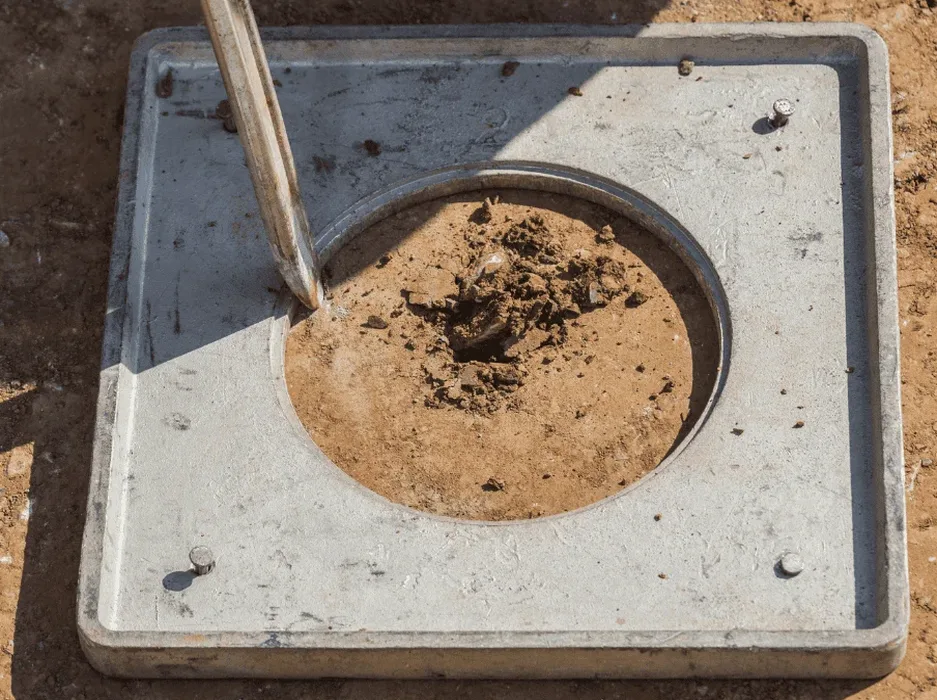
The subsurface between downtown Fargo and the newer developments south of 52nd Avenue tells two completely different stories. The historic core sits on compacted glacial till with relatively high blow counts, while the southern expansions rest on loose, saturated sands deposited by ancient meanders of the Red River. A standard penetration test in the first area might yield N-values above 30 at ten feet. The same SPT two miles south can record N=6 in silty sand fully submerged from fifteen feet down. That contrast defines the liquefaction risk map of Fargo. We run SPT drilling with split-spoon samplers per ASTM D1586-18, recovering disturbed samples for grain-size classification under ASTM D2487, then compute cyclic stress ratio and cyclic resistance ratio for the design earthquake defined by ASCE 7-22 and IBC 2024. Fargo experiences occasional seismic events, and the 46.9°N latitude means deep frost penetration that alters soil structure seasonally. Our ISO 17025 accredited laboratory processes the samples within 48 hours of extraction.
N=6 in saturated silty sand at 15 feet depth demands a different foundation strategy than N=35 in glacial till at the same elevation.