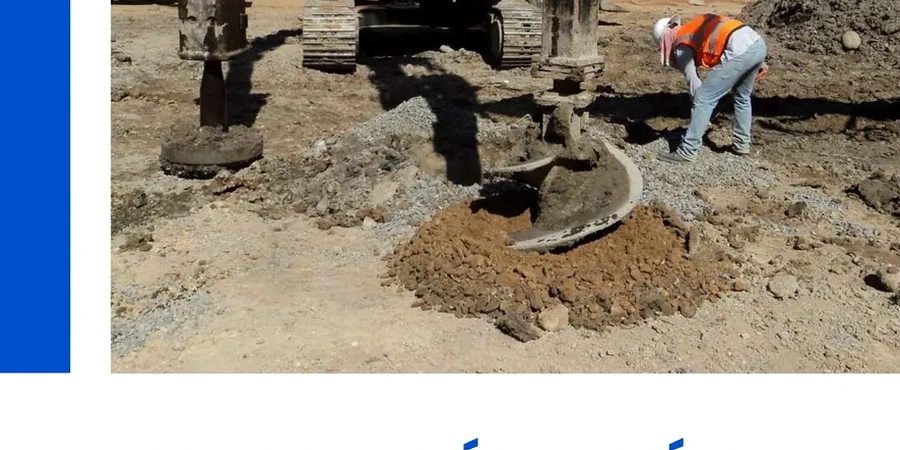
We recently reviewed a warehouse expansion plan near 45th Street where the geotech report showed 18 feet of soft lacustrine clay, a classic Fargo profile shaped by glacial Lake Agassiz. The structural engineer had specified a deep pile foundation, but the access constraints and budget simply couldn't absorb the cost. We proposed a stone column grid designed under the Priebe method with a 3-foot diameter and 22-foot depth, verified by field modulus tests. The bearing capacity jumped from 1,800 psf to over 5,000 psf, total settlement dropped below one inch, and the owner saved nearly 40% compared to piling. That's the kind of outcome we aim for in Fargo, where the fat clays don't forgive guesswork. A CPT test before design gives us the continuous tip resistance and sleeve friction profile we need to refine column spacing and avoid soft lenses, and we often pair it with vibrocompaction in the sandier pockets east of I-29.
In the Red River Valley clays, stone columns routinely triple the allowable bearing pressure while cutting post-construction settlement by 60% compared to untreated ground.