GEOTECHNICAL ENGINEERING
FARGO
HomeLaboratoryProctor test (Standard or Modified)

Proctor Test Services in Fargo: Standard & Modified Compaction

Practical geotechnics, field-tested.

LEARN MORE

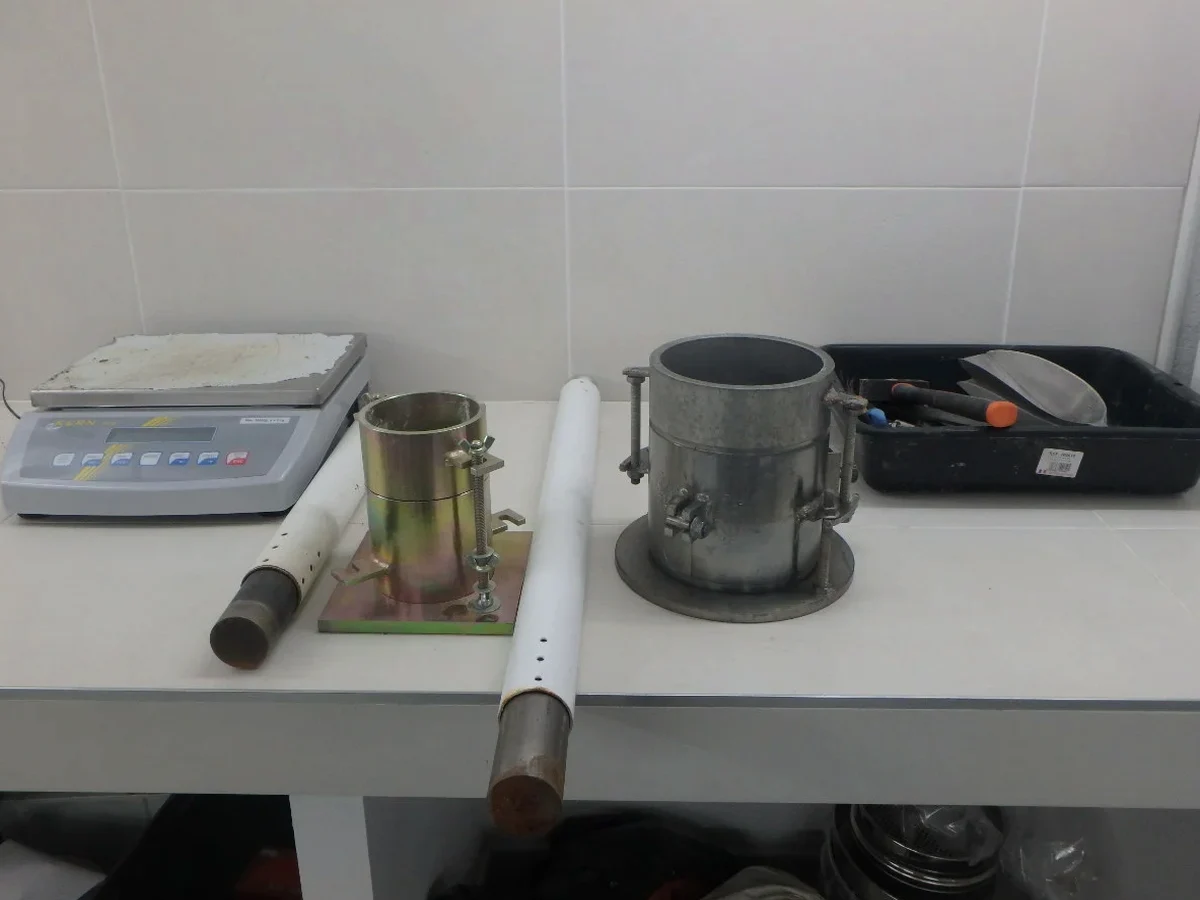
Specifications for any earthwork project in the Fargo metropolitan area must reference AASHTO T-99 or T-180 to establish the compaction benchmark. The lacustrine clays and silts deposited by the ancient Lake Agassiz exhibit high plasticity and a narrow window of workable moisture content, which makes standard Proctor test procedures essential before placing a single lift of fill. We run both standard and modified Proctor tests on material sampled directly from the borrow source or the site excavation, because the difference in compactive effort changes the density target by up to 12 percent in these fine-grained soils. When the project involves structural backfill against foundations or utility trenches, we often pair the Proctor with a sand cone density test to verify that field compaction meets the laboratory-derived curve.

A two-point change in moisture content on a Fargo silty clay can drop relative compaction from 98 percent to below 92 percent, and no proof-roll will catch it until the fill is already in place.
Our service areas

Methodology and scope

A recent commercial development near the Sheyenne River floodplain brought in silty clay fill that looked dry at the stockpile but turned plastic within two passes of the sheepsfoot roller. The contractor had assumed a moisture content that was nearly four points below optimum, and the lifts were flaking apart at the surface. We ran a modified Proctor curve on that material, which showed an optimum moisture of 17.8 percent at 112.4 pcf maximum dry density, and the field crew adjusted the water truck schedule accordingly. In Fargo‘s seasonal climate, where spring thaw saturates the upper subgrade and August heat bakes the crust, the relationship between moisture and density shifts enough to warrant re-testing when the borrow source changes. We also correlate Proctor results with Atterberg limits on the minus-40 fraction to flag any material that crosses the A-7-6 threshold, because highly plastic clays compact poorly and swell under freeze-thaw cycles.
Proctor Test Services in Fargo: Standard & Modified Compaction
Technical reference — Fargo

Local considerations

The single most expensive mistake we see on Fargo earthwork jobs is ordering a Proctor on material that does not represent what actually goes into the fill. A contractor pulls a sample from the top six inches of a stockpile, the lab delivers a curve at 112 pcf, and three weeks later the field density tests fail because the bottom of the same stockpile contained a different stratum with 30 percent more clay. The remedy is to re-run the Proctor at the contractor‘s expense while the spread sits idle, and on a commercial pad that delay burns more than the cost of the original test. Another recurring failure is compacting on the wet side of optimum in late October, when Fargo‘s nighttime temperatures drop below freezing before the fill has equilibrated. Ice lenses form in the clay matrix, the density readings look acceptable, and the following April the floor slab cracks along a grid pattern that traces every frozen lift line.

Need a geotechnical assessment?

Reply within 24h.

Email: contact@geotechnicalengineering1.org

Applicable standards

AASHTO T-99 (Standard Proctor) / ASTM D698-12, AASHTO T-180 (Modified Proctor) / ASTM D1557-12, ASTM D2487 (Unified Soil Classification – material description), ASTM D6938 (Field density by nuclear gauge – companion standard)

Technical parameters

ParameterTypical value
Test standard (Standard Proctor)AASHTO T-99 / ASTM D698-12
Test standard (Modified Proctor)AASHTO T-180 / ASTM D1557-12
Mold volume1/30 ft³ (4-inch mold) or 1/13.33 ft³ (6-inch mold)
Compactive effort (Standard)5.5 lb hammer, 12-inch drop, 3 layers, 25 blows/layer
Compactive effort (Modified)10 lb hammer, 18-inch drop, 5 layers, 25 blows/layer
Typical MDD range (Fargo clays)108–118 pcf
Typical OMC range (Fargo clays)14–20%
Reported curveMoisture–density plot with ZAV line overlay

Frequently asked questions

What does a Proctor test cost in Fargo?

For a standard or modified Proctor curve with five moisture points, expect to budget between US$90 and US$210 per sample. The exact number depends on whether we run the standard or modified procedure, the mold size required for the material gradation, and how many points are needed to define the peak of the curve clearly. We always quote a firm price after seeing the material or reviewing the geotechnical report.

Which Proctor method do Fargo building departments require?

Most municipalities in Cass and Clay counties, including the City of Fargo, default to the modified Proctor per AASHTO T-180 for structural fill under footings, floor slabs, and pavement. Landscape and non-structural fill often allows the standard Proctor, but always check the project specifications because the engineer of record may call out a higher compactive effort.

How long does a Proctor test take in the lab?

A full five-point curve takes about four to six working hours of oven drying, mixing, and compaction runs. We normally report results the next business day. If the material contains oversize particles that require the 6-inch mold and a rock correction, add one extra day for the sieve analysis and computation.

Can I use the same Proctor curve for the whole project?

Only if the borrow source stays consistent in color, texture, and gradation. When the excavation crosses a contact between two soil units, or when the contractor switches to a different pit, we strongly recommend running a one-point check against the original curve. On large Fargo earthwork spreads we typically run a new full Proctor for every 5,000 cubic yards of placed fill.

What happens if field density tests fail against the Proctor curve?

First we confirm the field gauge is calibrated and the correct curve is assigned. If the failure is real, the contractor re-works the lift by scarifying, adjusting moisture, and re-compacting. When the material itself has changed, we pull a new sample and run a fresh Proctor. We can turn that around quickly so the spread keeps moving.

Location and service area

We serve projects across Fargo and surrounding areas.

View larger map