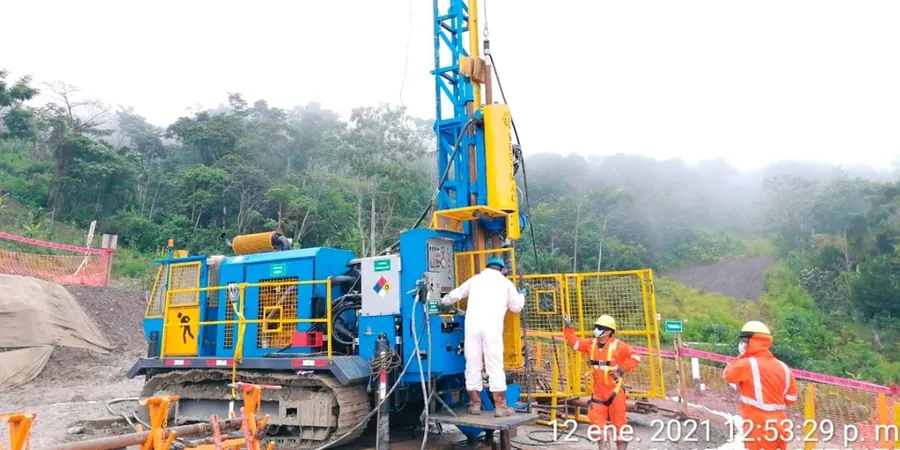
Fargo’s growth since the 1880s—from a riverside trading post to North Dakota’s largest economic center—has always been tied to the Red River. That river shaped the city’s grid, its economy, and, most critically for anyone building here today, its subsurface conditions. Beneath the streets and industrial parks, the Lake Agassiz lakebed deposits tell a story of soft, compressible clays and silts layered over glacial till. Getting reliable SPT (Standard Penetration Test) data in Fargo is not a formality; it is the only way to understand how those lakebed soils will behave under structural loads. When a developer is looking at a site near the Sheyenne River diversion or out toward Hector International Airport, the question is never just about bearing capacity—it is about settlement potential, seasonal groundwater fluctuations, and the risk of encountering organics in the upper 20 feet. Our team runs ASTM D1586-compliant SPT borings across Cass County, delivering N-value profiles that local structural engineers can actually use for shallow footing design and deep foundation scoping. For sites where the stratigraphy suggests variable density, we often recommend pairing SPT data with CPT soundings to fill in the gaps between discrete samples and get a continuous resistance profile through the silt layers that dominate Fargo’s subsurface.
In Fargo's Lake Agassiz silts, an SPT N-value of 6 versus 9 is the difference between a spread footing and a deep foundation system.