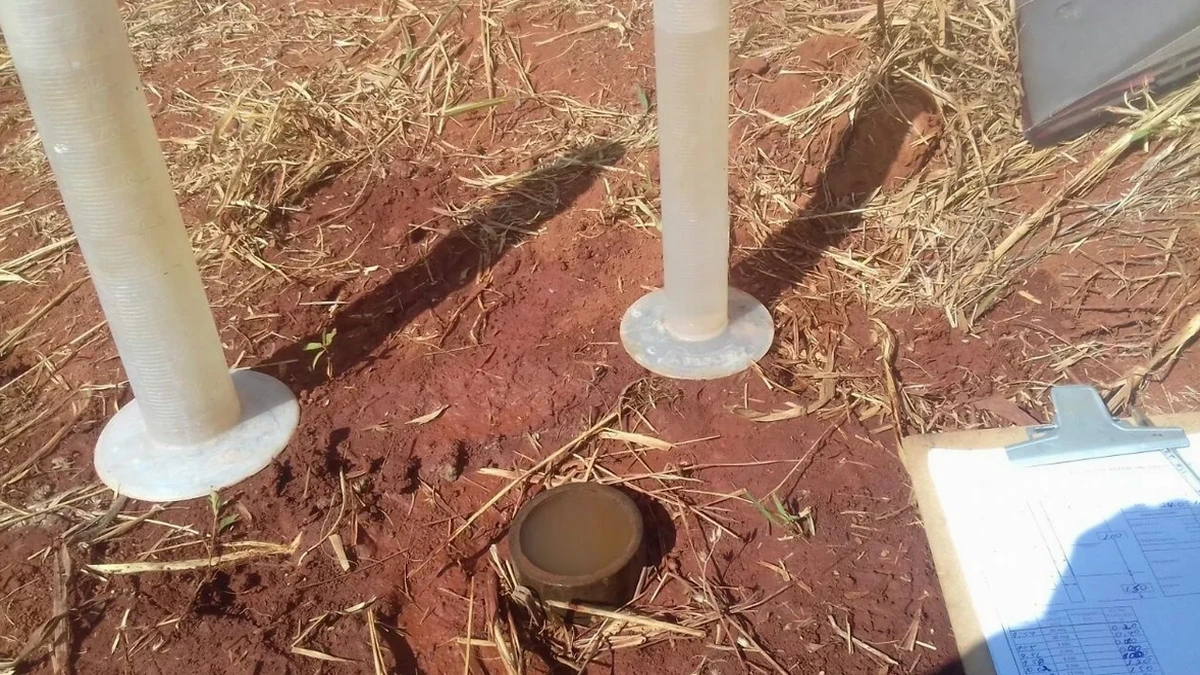
The first thing you notice on a Fargo test site is the sleeve—either a slotted PVC standpipe for a Lefranc test or a pneumatic packer assembly for a Lugeon setup, lowered into a borehole that cuts through the Red River Valley’s layered deposits. The crew monitors a graduated reservoir while water either infiltrates the formation or is pumped out, recording head differences at steady-state intervals. Fargo sits on the former floor of Glacial Lake Agassiz, so the stratigraphy alternates between fat clays, silty varves, and occasional sand stringers that make permeability values swing by orders of magnitude across short vertical distances. A standard project in south Fargo near the Sheyenne River diversion channel often requires us to isolate specific horizons because a bulk test would smear the contrast between the tight lacustrine clay and a thin transmissive lens. When the formation is too cohesive for a simple falling-head test, we switch to the Lugeon method—applying pressure in five stages to gauge fracture flow and assess whether the material dilates or clogs under hydraulic stress. For sites where the sand fraction is dominant, we pair the test with a grain-size analysis to correlate the measured permeability with Hazen’s empirical formula, and we often run an SPT drilling program beforehand to identify the exact depths where the sleeve should be seated.
A Lugeon test in Fargo’s varved clays tells you more about fracture connectivity than about matrix porosity—and that distinction drives every dewatering design in this basin.